Avalyn talks to Lise McNally (Granada Reports - ITV) ahead of Long Covid awareness day 2026

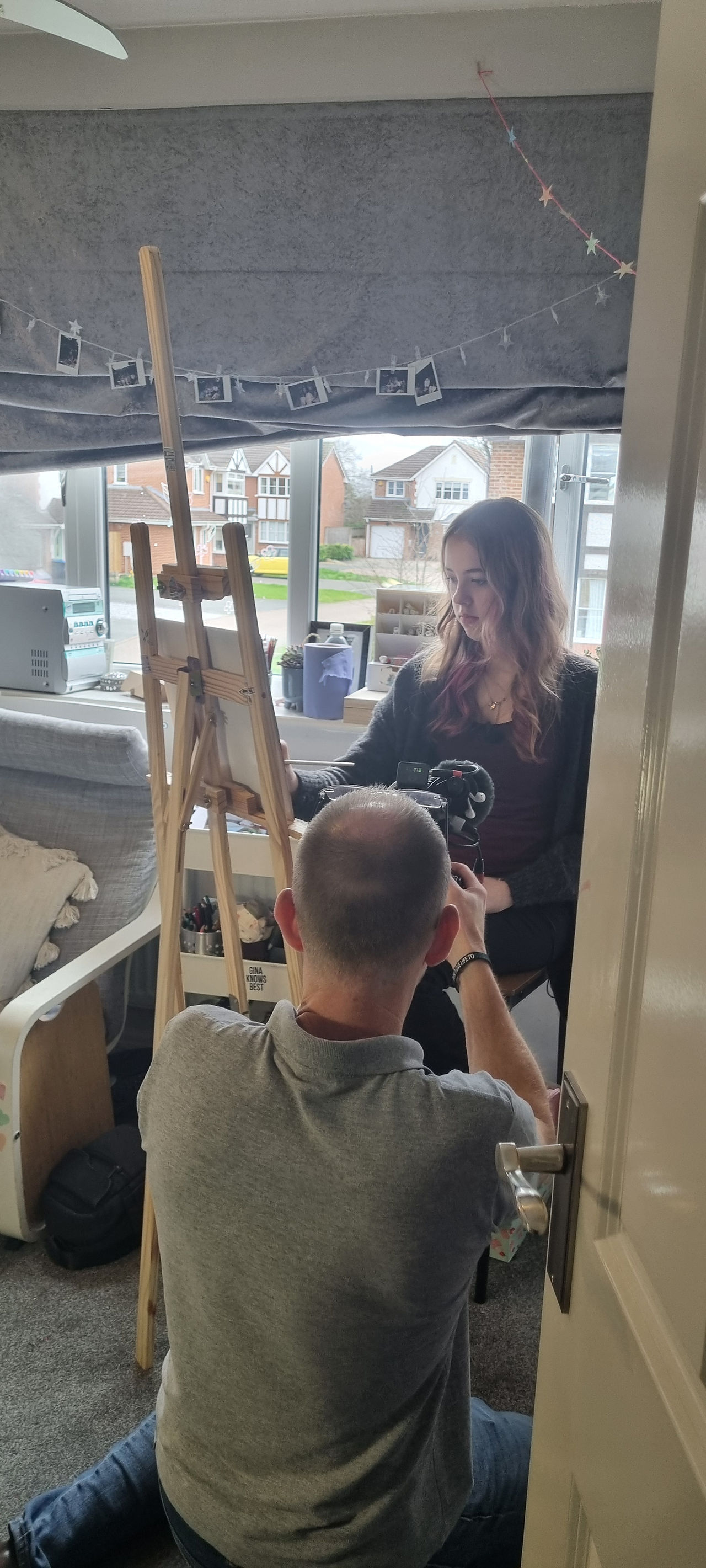
When you watch a piece on the news like the recent one Avalyn participated in on Granada Reports for ITV, what you don't see is the preparation and planning it took to get to that moment.
As Avalyn’s parent, I wanted to write this to share what you didn’t see on ITV Granada Reports: the reality behind the cameras, and why we agreed to open up our family’s story once more.
Why We Said Yes
When Long Covid Kids contacted us about taking part in filming for ITV focused on families affected by Long Covid, we hesitated. It has been exhausting over the years explaining this illness to schools, doctors, and others who sometimes think Long Covid is not real, that it is something that is made up. But we also know that if people like Avalyn stay invisible, nothing would change for the thousands of other children and adults diagnosed with Long Covid, many of whom experience serious limits on daily life.
Avalyn wants other young people with Long Covid to hear a voice that sounds like theirs on the news.
The team from ITV were amazing. They provided questions in advance and timed the interview at a point in the day that worked for Avalyn. They took their time, giving her space to rest when she needed it.


Telling a complicated story in a short slot
No TV segment can show the full impact Long Covid has had on our family. How, overnight, Avalyn went from being a healthy, active kid taking part in sports and performing arts to living with dizziness, pain, crippling fatigue and brain fog in a body that suddenly wouldn’t cooperate.
In the years since then, we’ve moved through two high schools that didn’t really know how to support chronic illness, faced the frustration of being told her Long Covid didn’t qualify for an Education Health and Care Plan, and ended up self‑guiding and self‑funding her ongoing education. It is heartbreaking watching your child study alone at home, wishing she could just be in school with her friends.
We knew that for hour or so we spent with the team, only a small portion of whats was recorded would be used so we tried to focus on a few key points:
That Avalyn’s life flipped in a single day, and she has been in a constant battle with her own body ever since.
That it is profoundly isolating to watch your friends go to school while you learn alone at home, even when you desperately want to be with everyone else.
That families like ours are often left on our own to navigate health, education, and support systems that weren’t built with Long Covid in mind.
The emotional weight for families
One of the most powerful lines in the ITV piece for me came from another mum, Jane, who said Long Covid had “absolutely, overwhelmingly capsized" her life. That word stayed with me, because it describes exactly what it feels like when your child’s illness overturns every part of your world: work, finances, friendships, even your sense of who you are.
Long Covid becomes the thing every decision has to work around. How we live our day to day life is driven by supporting Avalyn's health. We are constantly
supporting her to balance her physical health with her social and emotional wellbeing.
Like Jane, I have had to shift the way I work and the work I do to be available to support Avalyn. Home education means filtering through all the available resources to find the ones that are most accessible and will accommodate her needs. We learnt the hard way how debilitating exams are, knocking Avalyn back into a low place for days at a time. Being able to support Avalyn to access the things that mean the most to her, giving her the opportunities her peers have, is a job in itself.
The NHS is still struggling to understand Long Covid as a chronic illness; support, where it exists, is often minimal; and we hear “we’re still learning” more often than we hear a practical plan. It’s not just the Long Covid that wears us all down, but the constant need to prove it exists, to seek answers and find support.
Why stories like Avalyn’s matter now
ONS data suggests that in April 2024 over 111,000 children were living with a Long Covid diagnosis, with one in five experiencing serious limitations, and no new national data has been collected since. Without proper data, the economic and educational impact on young people is easy to ignore. Long Covid kids is asking for people to write to MPs as part of their "Invisible to policy, visible in children's lives" campaign calling for better recognition and support ahead of Long Covid Awareness Day.
There are signs of progress: new government guidance for schools developed with Long Covid Kids is a step in the right direction, and more research is starting to appear. But these changes are slow, and they are arriving into systems that are already stretched thin. Letting Avalyn’s story be filmed was our way of adding one more real face and real voice to a debate that too often stays abstract. Putting a real face to the statistics, reminding people that these are not abstract “cases” but children whose GCSEs, friendships and futures are being quietly rewritten.
What I hope people might take from this news piece
As a parent, my hopes for this piece are simple:
That a teacher or head of year watching will recognise a student like Avalyn and push for proper adjustments at school.
That another family living this reality will see us and feel less alone, and maybe reach out for community and support.
That someone in a position to change policy will understand that not counting these children properly means not supporting them properly.
Most of all, I want people to see that children like Avalyn are not “lazy” or are not “lazy” or “opting out of life” they are fighting, every day, for the chance to live it as best they can. If our small piece on ITV helps even a few people to pause, listen and take Long Covid seriously, then the energy it cost Avalyn (and us) will have been worth it.


Comments